
Get Your Business Ready for Google AI Mode
Adapt to the future of search with Google AI Mode SEO strategies from Pixel & Rank. We combine advanced SEO techniques, AI-driven insights, and audience-focused content optimization to strengthen your online visibility, help potential customers discover your business, and create more opportunities for qualified traffic and sustainable growth.
14+
Years Of Experience
+30%
Growth in AI Search Visibility
100%
AI-Backed SEO Execution
How Google AI Is Transforming SEO
Google AI is changing how people discover information, explore solutions, and find businesses online. With AI-powered experiences such as Google AI Mode, search is becoming more conversational, delivering synthesized answers alongside relevant sources and links. This shift creates new opportunities for brands to improve visibility beyond traditional search rankings.
That’s where Google AI SEO comes in. Pixel & Rank combines structured content, relevant schema markup, topical authority, and search intent analysis to help your website align with evolving search experiences. Our tailored strategies focus on making your content more useful, accessible, and relevant, increasing its potential to be discovered and referenced in AI-powered search results.
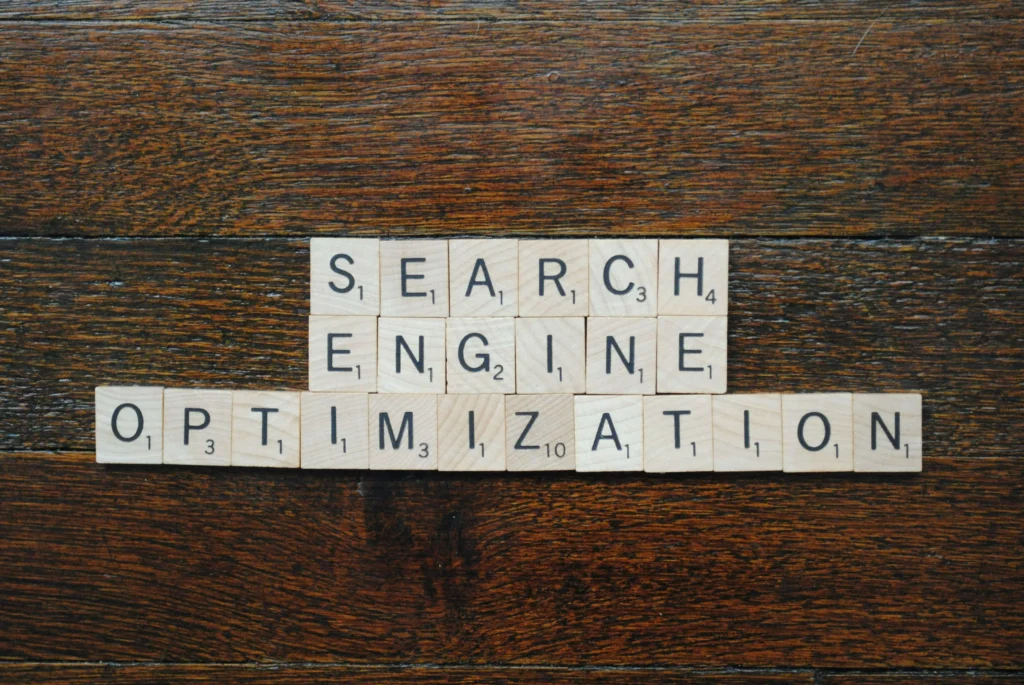
How Google AI Mode Works
Delivering Quick, AI-Generated Answers
Google AI Mode helps users explore information through AI-generated responses that bring together relevant details from multiple sources. For businesses, creating accurate, well-organized, and useful content can improve its suitability for these search experiences and increase opportunities for relevant visibility.
Understanding Search Intent
Google’s AI-powered search experiences aim to understand the context behind a query, not just the words entered. Content that addresses the real questions, needs, and challenges of your audience can better align with user intent. Our Google AI SEO strategies focus on conversational queries and meaningful answers to help your website serve users more effectively.
Drawing on Relevant and Reliable Sources
AI-powered search can synthesize information from multiple sources to respond to user questions. Reliable information, demonstrated expertise, and clear supporting evidence help establish your website’s credibility. By strengthening content quality and authority signals, we help your brand build a stronger foundation for visibility across AI-driven search experiences.
Prioritizing Helpful, Well-Structured Content
Useful content remains essential in AI-powered search. Clear headings, descriptive subheadings, concise explanations, and accurate information make pages easier for visitors to navigate and understand. Our AI SEO approach helps organize your content around audience needs while maintaining depth, originality, and practical value.
Evaluating Relevance and Content Quality
Keywords alone are not enough to create a successful SEO strategy. Content should address the topic comprehensively, reflect the user's intent, and provide information that is genuinely useful. We combine keyword research, semantic optimization, and content analysis to improve relevance and support stronger organic search performance.
Connecting Users With Relevant Information
Google’s AI search experiences can identify and synthesize information from different web sources to help answer complex questions. Content with a logical structure, specific explanations, and relevant supporting details can make important information easier to interpret. We optimize your website to support discoverability while keeping the focus on accuracy and user value.
Improving the Search Experience
A website should deliver value both before and after a visitor clicks through from search. Fast-loading pages, intuitive navigation, mobile-friendly layouts, and easy-to-understand content help create a better experience. Our Google AI SEO services combine technical improvements with content optimization to support usability, engagement, and long-term organic growth.
Adapting to Google AI Mode
Search behavior continues to evolve as AI-powered experiences make it easier for users to explore topics and ask follow-up questions. Businesses need an adaptable SEO strategy that accounts for conversational search, content quality, technical accessibility, and brand authority. Pixel & Rank helps your business respond to these changes through ongoing analysis and strategic optimization, building a stronger foundation for visibility across traditional and AI-powered search.
Optimize Your Website for Google AI Model and Get Featured in Smart Answers!
The Pixel & Rank Approach to Smarter Google AI Mode SEO
We help businesses adapt to the evolving search landscape with SEO strategies designed for traditional search engines and AI-powered experiences. Our approach combines audience-focused keyword research, high-quality content, technical optimization, and authority building to improve your website’s discoverability and strengthen its potential to appear in relevant Google AI search experiences.
AI-Focused Keyword Strategy
We research conversational keywords, long-tail phrases, and user intent to understand how your audience searches for information. This helps us build targeted strategies that connect your content with relevant queries and business goals.
- Keyword research and topic clustering
- Semantic targeting and intent analysis
- Competitor and query research
AI-Optimized Content Creation
We create original, informative, and well-structured content that answers audience questions and demonstrates your expertise. Our approach focuses on clarity, relevance, and comprehensive topic coverage to support visibility across AI-powered search experiences.
- Comprehensive topic coverage
- Clear headings and concise answers
- Featured snippet-friendly formatting
Technical SEO for AI Crawlability
We strengthen your website’s technical foundation so search engines can discover, crawl, and interpret your content more effectively. Our optimizations also support a smoother user experience across devices.
- Relevant schema markup
- Improved site structure and internal linking
- Page speed, mobile usability, and Core Web Vitals
Authority Building & AI Trust Signals
We help establish your brand as a credible source through useful content, reputable backlinks, and consistent business information. These efforts support your online reputation and strengthen your overall SEO foundation.
- Author and About page optimization
- Quality backlinks from relevant websites
- Reviews, digital PR, and brand mentions
Structured Data & Schema Enhancement
We implement appropriate structured data to provide search engines with clearer information about your business, website, and content. This can improve content understanding and eligibility for supported search features.
- Relevant schema types, including Organization and Article
- Consistent metadata and entity information
- Industry-specific structured data
Google AI Search Performance Tracking
We evaluate available search performance data to understand how your website performs and identify opportunities for improvement. Ongoing analysis helps us refine your strategy as search behavior and Google's AI experiences evolve.
- Impressions, clicks, and organic traffic tracking
- Google Search Console performance analysis
- Continuous content and technical improvements
How Google AI and SEO Work Together
Google AI is changing how people discover information by prioritizing context, relevance, and helpful answers. We combine traditional SEO with AI-focused optimization to strengthen your website’s visibility across evolving search experiences.
| SEO Factor | Traditional SEO | AI SEO |
|---|---|---|
| Keywords | Target search terms | Understand user intent |
| Backlinks | Build authority | Strengthen credibility |
| Structure | Organize web pages | Present clear, accessible information |
| Schema | Clarify page content | Provide structured context |
| Content | Inform and engage | Answer questions naturally |
Why Your Website Isn’t Appearing in Google’s AI Results
Google’s AI-powered search experiences prioritize relevant information, helpful content, and reliable sources. If your website isn’t gaining visibility, gaps in content structure, technical SEO, or search intent alignment may be limiting its potential.
Your Content Lacks Clear Structure
Poorly organized content can make important information harder to understand. Clear headings, concise explanations, and logical sections help users and search systems navigate your pages more effectively.
Your Website Lacks Relevant Structured Data
Missing or incorrect schema markup can limit the additional context available to search engines. Implementing appropriate structured data helps clarify your content, business details, and key entities.
Your Content Misses Conversational Search Intent
People often use natural, question-based queries when searching with AI. Content that directly addresses audience questions and provides relevant, helpful answers can better align with these search behaviors.
Your Content Lacks Authority and Supporting Evidence
AI-powered search draws on relevant sources to generate responses. Original insights, accurate information, credible references, and a strong online reputation help establish trust and strengthen your website’s overall SEO foundation.
We Don’t Just Use Keywords — We Reshape Your Content for How AI Ranks
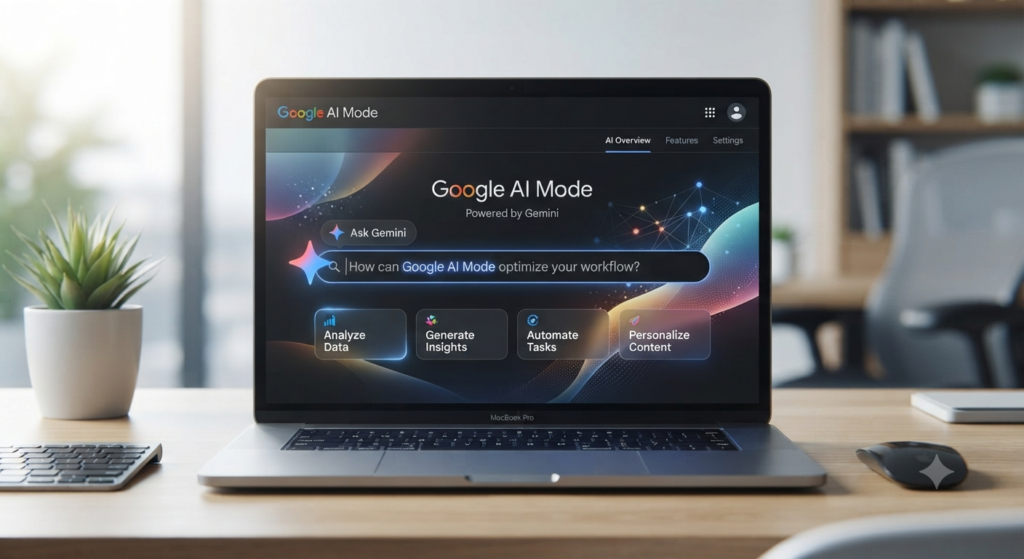
How to Optimize Your Website for Google AI Mode
Focus on User Questions
Create content that answers common audience questions with clear, accurate, and practical information. Use FAQs and concise explanations to address user needs and improve content accessibility.
Structure Content Effectively
Organize pages with descriptive headings, short paragraphs, bullet points, and logical sections. A clear structure helps users navigate your content and enables search systems to interpret it more easily.
Use Natural, Helpful Language
Write conversationally and naturally instead of forcing keywords into your content. Focus on user intent, readability, and genuinely useful information.
Create High-Quality, Original Content
Publish relevant, trustworthy content that demonstrates expertise and offers unique value. Avoid repetitive, generic, or copied material, and review AI-assisted content for accuracy and originality.
Strengthen Topic Relevance
Cover your main topics and related subtopics comprehensively. Use semantic keywords and relevant internal links to build topical depth and address a wider range of audience questions.
Build Authority and Trust
Demonstrate credibility through expert insights, reliable references, transparent author information, and quality backlinks. Consistent, accurate business information also supports trust.
Adapt to Search Changes
Monitor developments in Google's search features and adjust your SEO strategy accordingly. Prioritize helpful content, technical accessibility, and user experience rather than chasing algorithm trends.
Use AI SEO Tools Effectively
Use SEO tools to research search queries, identify content gaps, analyze competitors, and improve content structure. Combine automated insights with human expertise to maintain quality and relevance.
Match Search Intent
Understand whether users want information, comparisons, or a specific service. Create content that addresses their needs directly and provides clear next steps where appropriate.
Keep Content Updated
Review important pages regularly to maintain accurate information, current statistics, and relevant recommendations. Update content when facts, services, or audience needs change.
Prepare for Conversational Search
Optimize content for natural-language questions and follow-up queries. Use descriptive headings, concise summaries, relevant visuals, and clear explanations to support users exploring topics through AI-powered search.
Benefits of Google AI Mode SEO
Improve Visibility in AI-Powered Search
Optimize your website content to increase its potential to appear in Google’s AI-generated responses. This helps more users discover your brand, explore your services, and find relevant information about your business.
Reach Conversational Search Queries
Target natural-language questions, long-tail keywords, and conversational phrases that reflect how people search online. This helps align your content with evolving search behaviors and relevant audience needs.
Match User Intent More Effectively
Develop content that addresses informational, navigational, and transactional search intent. By answering users’ questions with relevant information, you can create better experiences and attract more qualified visitors.
Strengthen Featured Snippet Opportunities
Structure your content with descriptive headings, concise explanations, FAQs, and helpful examples. This improves readability and may increase eligibility for featured snippets and other supported Google search features.
Improve Content Understanding With Schema
Implement relevant structured data to help search engines interpret your website’s content, services, and business information. Appropriate schema markup can provide additional context and support eligibility for certain enhanced search features.
Support Better Content Discovery
Improve internal linking, page structure, and topic coverage to help search engines discover and understand your important pages. A well-organized website also makes it easier for visitors to navigate relevant information.
Build Topical Authority
Create interconnected content around your core services, industry topics, and customer questions. Covering related subjects in depth helps demonstrate expertise and builds a stronger foundation for long-term SEO performance.
Enhance User Engagement
Publish useful, readable, and relevant content that helps visitors find answers without unnecessary effort. Combined with intuitive navigation and responsive design, this can encourage meaningful interactions with your website.
Track Search Performance
Monitor available data on impressions, clicks, organic traffic, and engagement to understand how your SEO strategy performs. Regular analysis helps identify content gaps, measure progress, and guide future optimizations.
Adapt to Evolving Search Experiences
Keep your SEO strategy flexible as Google introduces new AI-powered features and user search behaviors change. Ongoing content updates and technical improvements help your website remain aligned with current search best practices.
Attract More Relevant Traffic
Target specific search queries and customer needs to connect with audiences actively researching your products or services. Better alignment between content and intent can create more opportunities for qualified visits and conversions.
Strengthen Expertise and Trust
Showcase original insights, accurate information, author expertise, and credible references to reinforce your brand’s reliability. Demonstrating Experience, Expertise, Authoritativeness, and Trustworthiness (E-E-A-T) supports a stronger, more credible online presence.
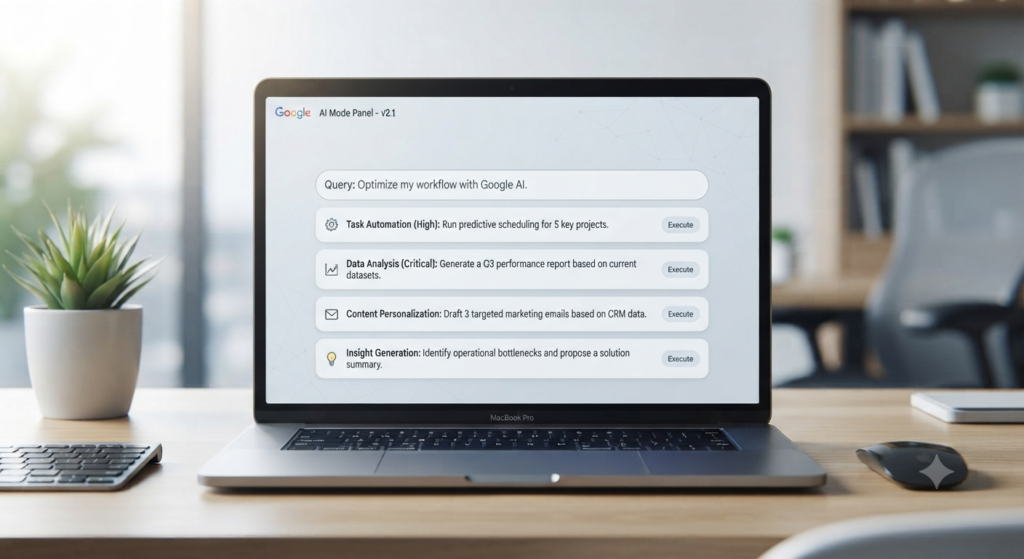
Industries We Help Reach More Users Through Google AI Search
Ecommerce
Optimize product and category pages with clear descriptions, relevant details, and structured data to improve discoverability and connect with shoppers researching products through AI-powered search.
Education
Showcase courses, educational resources, and institutional expertise through well-organized content that answers learners’ questions and supports discovery across informational searches.
Real Estate
Optimize property listings, location pages, and real estate guides to help prospective buyers, sellers, and investors discover relevant properties and local expertise online.
Healthcare
Develop accurate, trustworthy, and easy-to-understand healthcare content supported by relevant expertise and appropriate structured data to strengthen credibility and online visibility.
Finance
Create reliable, up-to-date financial content that addresses user questions with clear explanations, credible sources, and relevant business information to build trust and improve search visibility.
Lifestyle & SaaS
From travel and wellness to software solutions, we develop useful, topic-focused content that addresses audience needs, explains key benefits, and supports visibility across traditional and AI-powered search experiences.
Make Your Website AI-Ready with Technical SEO that Improves Crawlability and Speed!
Traditional SEO vs Google AI SEO vs AIO SEO vs GEO SEO
| Aspect | Traditional SEO | Google AI SEO | AIO SEO | GEO SEO |
|---|---|---|---|---|
| Definition | Improves website visibility in traditional search results | Aligns content with Google’s AI-powered search experiences | Optimizes digital content for better understanding and visibility across AI systems | Improves the chances of content being referenced in generative AI responses |
| Primary Focus | Keywords, backlinks, technical SEO, and rankings | Search intent, content relevance, and topic coverage | Content clarity, structure, and machine readability | Helpful information, credible sources, and content that supports AI-generated answers |
| Desired Outcome | Higher organic rankings and relevant traffic | Greater potential visibility in Google AI responses | Improved discoverability across AI-powered platforms | Increased opportunities for brand mentions and citations in AI-generated answers |
| Common Tools | Semrush, Ahrefs, Google Search Console | Google Search Console, Semrush, and AI search monitoring tools | ChatGPT, Jasper, and content optimization tools | AI visibility trackers, prompt research tools, and Google Search Console |
| Target Audience | Users searching through traditional search engines | Users exploring Google’s AI-powered search results | Users discovering information through AI-assisted search and content platforms | Users seeking synthesized answers from generative AI tools |
| Content Style | Relevant, optimized, user-focused web pages | Clear, comprehensive content that addresses search intent | Well-organized, readable content with clear context | Informative, evidence-based content that directly answers questions |
| Key Strategies | Keyword research, technical SEO, internal linking, and quality backlinks | Semantic SEO, useful content, and strong topical coverage | Intent-focused writing, structured content, and appropriate schema | Original insights, credible references, clear answers, and authoritative content |
| Role of AI | Supports research, analysis, and workflow automation | Generates synthesized responses using relevant information and sources | Helps analyze, organize, and optimize content for AI systems | Generates responses that may reference or cite relevant web sources |
| Importance in 2026 | Remains a core foundation of organic search visibility | Increasingly relevant as Google expands AI-powered search experiences | A useful approach to improving content discoverability across AI systems | An evolving discipline for strengthening visibility in generative search |
| Internal Linking | Connects related pages and distributes link equity | Helps establish topic relationships and guide users to relevant pages | Clarifies relationships between content and related entities | Supports contextual relevance and helps users explore supporting information |
| Technical Optimization | Focuses on crawlability, indexing, speed, and site structure | Combines sound technical SEO with clear, accessible content | Emphasizes accessible formatting, clear structure, and machine-readable information | Relies on accessible pages, clear content, and reliable source information |
| Main Challenges | Competition, technical issues, and ranking fluctuations | Understanding visibility across changing AI search experiences | Measuring AI visibility and maintaining useful, accurate content | Tracking citations, brand mentions, and referral traffic across AI platforms |
| Best Practices | Follow SEO fundamentals and create valuable content | Publish helpful content, maintain technical health, and use relevant structured data | Make content clear, accurate, organized, and easy to interpret | Support claims with evidence, demonstrate expertise, and provide original value |
| Emerging Trends | Greater emphasis on user experience and content quality | Growth in conversational and AI-generated search experiences | Broader adoption of AI-assisted content optimization | Increased focus on brand mentions, citations, and visibility in AI-generated responses |