
Search engine optimization has always been about helping people find the right information online. However, the way people search is changing. Alongside traditional search engines, users are increasingly exploring AI-powered tools to ask questions, compare services, and discover businesses.
For companies investing in digital marketing, this raises an important question: should you continue focusing on traditional SEO, or is it time to invest in AI SEO?
The good news is that you don’t necessarily have to choose between them. Both approaches aim to connect people with relevant information, but they differ in how search experiences present answers and how businesses can measure visibility.
In this guide, we’ll explain the differences, explore practical examples, and help you decide how to build an SEO strategy that supports your business today and prepares it for tomorrow.
What Is Traditional SEO?
Traditional SEO is the process of improving a website’s visibility in organic search engine results. It involves helping search engines discover, understand, and evaluate your content so that relevant pages can appear for appropriate searches.
A traditional SEO campaign typically includes keyword research, technical optimization, content creation, internal linking, and earning relevant backlinks.
For example, a plumbing company might optimize a service page for “emergency plumber in Delhi.” The page could explain its emergency services, service areas, response process, and contact options.
When the website is technically accessible and the page is relevant to the search, it may have an opportunity to appear in Google’s conventional organic results.
Effective Traditional SEO Strategies focus on understanding customer intent, providing useful information, and building a website that deserves to be discovered.
What Is AI SEO?
AI SEO refers to optimizing a website and its content for discovery across AI-powered search experiences, including AI-generated summaries and conversational answers.
These experiences can include Google’s AI Overviews, Google AI Mode, and ChatGPT Search. Depending on the platform and query, users may receive a summarized answer with links to relevant sources rather than only a traditional list of results.
For example, someone might ask an AI search tool, “What should I look for when hiring an SEO agency for a small business?”
A useful response might explain important selection criteria and link to sources that discuss SEO services, pricing, and campaign evaluation.
Businesses want their expertise and content to be discoverable when these questions arise.
This is where AI Search Engine Optimization becomes relevant. It extends established SEO principles to search experiences that interpret questions, retrieve information, and generate responses.
AI SEO does not guarantee a brand mention or citation. Instead, it focuses on creating accessible, relevant, and trustworthy content that can serve users across different discovery channels.
Traditional SEO vs AI SEO: Key Differences
Although both approaches share important fundamentals, they emphasize different aspects of the search experience.
| Comparison | Traditional SEO | AI SEO |
| Primary focus | Organic search listings | Discovery through AI-powered answers and search experiences |
| Content approach | Relevant pages targeting keywords and search intent | Clear, useful answers that address related questions and context |
| Visibility | Rankings, impressions, and organic clicks | AI citations, brand mentions, referrals, and other measurable visibility |
| Technical foundation | Crawling, indexing, website structure, and performance | The same fundamentals, plus attention to accessibility for relevant AI search systems |
| Authority | Relevant links, expertise, and reputation | Expertise, reliable information, and a credible brand presence |
| Measurement | Rankings, traffic, leads, and conversions | Those same metrics, supplemented by AI-related referrals and mentions where measurable |
The Difference Between Traditional SEO and AI SEO is primarily about the search experience being optimized for, rather than two completely separate sets of rules.
Google’s official guidance confirms that foundational SEO practices remain relevant to its AI search features. ChatGPT Search has its own systems, so businesses should also understand its specific crawler and discovery guidance.
How AI Is Changing SEO
How AI Is Changing SEO becomes clearer when we look at how people interact with search tools.
Instead of searching for several short phrases, users may ask one detailed question and follow up with additional requests. AI-powered experiences can retrieve information from multiple sources and present a response that addresses several aspects of the question.
Consider someone researching a website redesign. Their questions might include:
- How much does a business website cost?
- Which features are essential?
- Should I choose a custom website or a template?
- How do I make sure my new website is SEO-friendly?
A business that publishes useful resources covering these questions may have more opportunities to help users throughout their research process.
This makes SEO in the Age of AI less about repeating keywords and more about understanding the questions behind them.
However, keywords still matter. They help businesses understand what people are searching for and how to organize content around genuine needs.
Can AI SEO Replace Traditional SEO?
No. Traditional SEO remains an important foundation for AI search visibility.
Search engines and AI-powered search experiences need ways to discover and interpret information. Technical accessibility, relevant content, clear page structure, and credible sources remain valuable.
For example, if your website accidentally blocks search crawlers, publishing more AI-focused articles will not necessarily solve the underlying problem.
Similarly, an article that lacks useful information is unlikely to become a strong resource simply because it was written with an AI tool.
The relationship between AI SEO vs Traditional SEO is therefore complementary. Traditional SEO helps establish a strong website foundation, while AI SEO broadens the focus to additional ways people discover information.
The practical choice is not whether to abandon one approach for the other. It’s how to combine both within a coherent strategy.
Practical AI SEO Strategies Businesses Can Use
1. Create Helpful, Question-Focused Content
Organize content around real customer questions, concerns, and decisions.
A digital marketing agency could publish resources explaining SEO pricing, campaign timelines, technical audits, local SEO, and content strategy.
Answer the main question clearly, then provide supporting details, examples, and evidence. Avoid publishing repetitive articles that offer little beyond what already exists.
These AI SEO Strategies help improve the usefulness of your website for people, regardless of where they discover it.
2. Strengthen Your Technical SEO Foundation
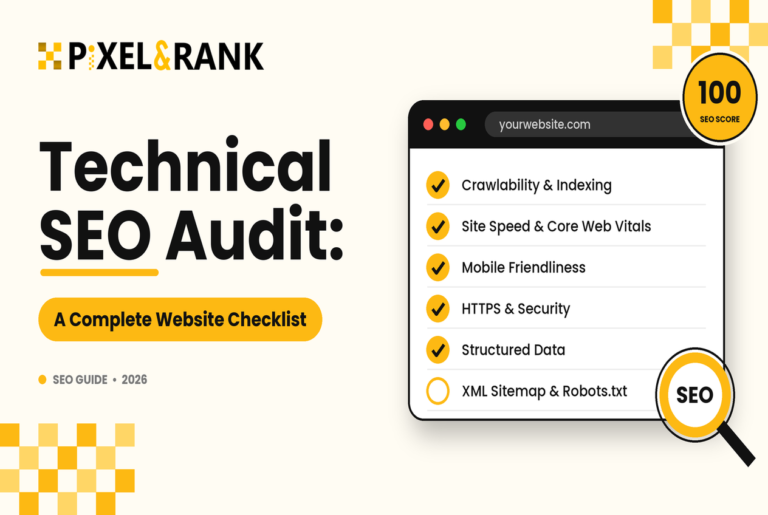
Make sure important pages can be crawled and indexed. Review robots.txt, XML sitemaps, canonical tags, internal links, redirects, and mobile performance.
If your business wants to appear in ChatGPT Search, review OpenAI’s guidance on allowing OAI-SearchBot to access the content you want discovered.
Technical accessibility does not guarantee inclusion, but it helps remove preventable barriers.
3. Demonstrate Genuine Expertise
Publish original insights, detailed case studies, practical examples, and accurate information. Include relevant author credentials and cite reliable sources where appropriate.
For example, instead of simply claiming that an SEO campaign improves traffic, explain the work performed, the measurement period, and the results achieved.
A credible website gives customers more reasons to trust your business and provides useful context for search systems.
4. Use AI Tools to Support Your Workflow
AI SEO Tools can help with keyword clustering, content outlines, competitor research, technical issue summaries, and identifying content gaps.
However, AI-generated recommendations require human review. Tools can misunderstand search intent, overlook important technical details, or suggest inaccurate information.
Use AI to support research and analysis rather than replace professional judgment.
5. Optimize Content Without Overusing Keywords
AI Content Optimization involves improving clarity, completeness, structure, and relevance.
Use descriptive headings, concise explanations, helpful tables, and internal links where they improve the reading experience.
Avoid forcing keywords into every paragraph or creating large volumes of generic content. Google’s guidance emphasizes original, helpful, people-first content rather than mass-produced pages that add little value.
6. Measure Results Across Search Channels
Continue tracking conventional SEO performance, including impressions, rankings, organic traffic, leads, and conversions.
Where data is available, also examine referrals from AI platforms, brand mentions, and citations for relevant questions.
For example, ChatGPT referral URLs can include utm_source=chatgpt.com, which can help you identify visits originating from ChatGPT Search in analytics tools.
These measurements can help you understand which discovery channels contribute to business outcomes.
What Is the Role of GEO in Modern SEO?
Generative Engine Optimization vs SEO is another common comparison in digital marketing.
Generative engine optimization (GEO) describes efforts to improve the likelihood that a brand or its content will be referenced in AI-generated responses.
Traditional SEO and GEO overlap in several areas, including technical accessibility, content quality, relevance, and credibility. GEO places additional emphasis on understanding visibility within generative search experiences.
There is no universally accepted formula that guarantees inclusion in AI answers. Be cautious of services promising fixed AI rankings or guaranteed citations.
Instead, build a website that answers real questions, demonstrates genuine expertise, and follows established search guidelines.
Benefits of AI SEO for Businesses
The potential Benefits of AI SEO include additional opportunities for discovery, stronger brand awareness, and more ways to help customers research a product or service.
Businesses may benefit from:
- Reaching audiences who use AI-powered search experiences.
- Building trust through useful, well-supported content.
- Helping customers understand services before contacting a company.
- Identifying new content opportunities from detailed customer questions.
- Diversifying their approach to online discovery.
These outcomes are not guaranteed. Performance depends on the website, industry, competition, platform, and user behaviour.
The most effective approach combines established SEO fundamentals with thoughtful experimentation as search continues to evolve.
Build a Future-Ready SEO Strategy With Pixel & Rank
Search is evolving, but the fundamentals of helping people find useful and trustworthy information remain important.
At Pixel & Rank, we can help you strengthen your technical SEO, improve content quality, identify search opportunities, and develop a practical strategy for traditional and AI-powered discovery.
Whether you need a website audit, a content strategy, or guidance on adapting to changing search behaviour, the first step is understanding your website’s current performance.